Nagano Prefecture, defined by its rugged alpine topography, deep valleys, and sweeping north-to-south expanse, harbors one of the Japanese archipelago’s best-kept horticultural secrets. While global travelers frequently flock to the congested metropolitan corridors of Tokyo and Kyoto to witness the annual sakura (cherry blossom) season, few recognize that Nagano boasts the highest concentration of ancient, centuries-old cherry trees in Japan.
Because the prefecture stretches vertically across varied elevations and microclimates, its blooming cycle defies a single, uniform window. Instead, spring rolls through Nagano in a rolling wave that extends the seasonal window far beyond the brief, frantic weeks typical of Japan’s urban centers. From early April through late April, the landscape transforms into a dynamic tableau of color: deep pink canopies unfurl against feudal stone walls, luminous weeping cherries drape over moss-laden temple grounds, and mirror-like alpine lakes reflect snow-capped mountain ranges.
For the discerning traveler, landscape photographer, and cultural enthusiast, Nagano offers an escape from the mass-tourism gridlock. This comprehensive report details eight premier cherry blossom destinations across the prefecture, analyzing their historical significance, botanical makeup, optimal viewing windows, and logistical accessibility.
Detailed Chronology: The Progressive Wave of Nagano’s Sakura Season
The chronological progression of Nagano’s cherry blossom season is directly tied to its geographical layout. Valleys warm up first, while high-altitude lakes and mountain outposts retain their winter chill well into mid-spring. Understanding this sequence allows visitors to intercept peak blooms (mankai) and witness the ethereal sakura fubuki—the swirling blizzard of falling petals—across multiple regions over several weeks.
Phase 1: Early April (The Opening Salvo)
The season kicks off in the southern and central basins, where historical fortresses and parklands experience an early surge of vitality.
1. Takato Castle Ruins Park: Heart-Shaped Canopy of Petals
Blooming Peak: April 6 – 12
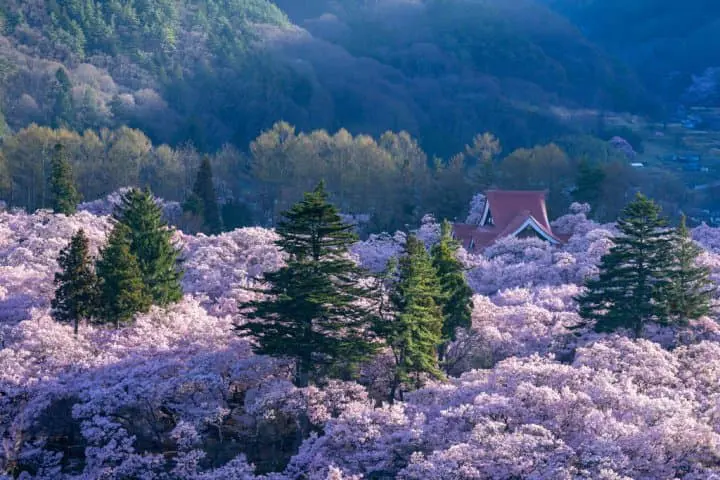
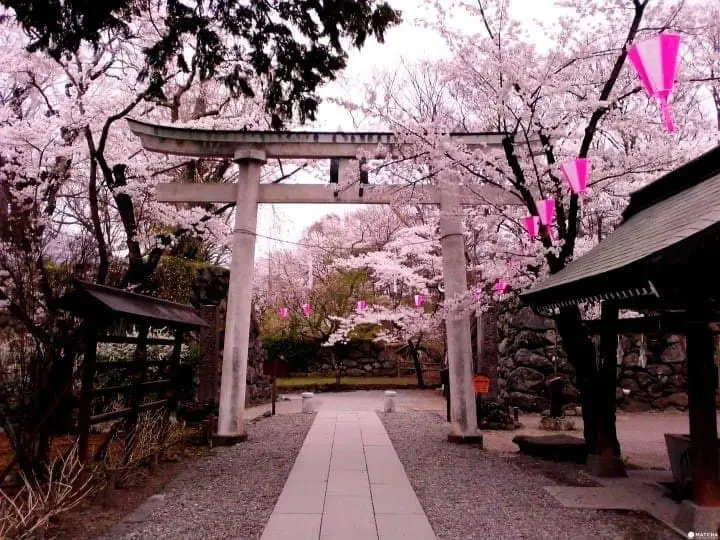
Botanical Highlights: Home to roughly 1,500 trees, predominantly the Takato-kohiganzakura variety—hailed locally as the "Number One Cherry Blossoms Under Heaven." These petals are visibly smaller and possess a deeper, richer pink hue than the ubiquitous Somei Yoshino. Many of these specimens exceed 140 years of age.
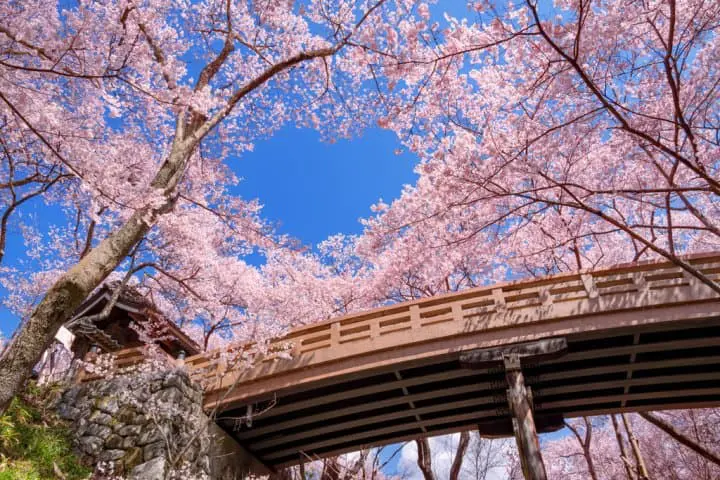
Cultural Context: Recognized officially as one of Japan’s Three Great Cherry Blossom Spots, Takato Castle Ruins Park hosts an energetic annual festival beginning April 1st. Beyond daytime viewings, comprehensive evening illuminations (yozakura) cast an ethereal glow over the grounds. A cherished tradition among visitors is searching for the natural heart-shaped framing formed by the interlocking canopy overhead.
Logistics: Located at Higashi-takato, Takato-machi, Ina City. Access via the JR Iida Line to Ina City Station, transferring to the Takato Line Bus (approx. 25-minute ride), followed by a 15-minute walk.
2. Ueda Castle Ruins Park: Samurai Heritage and Living History
Blooming Peak: April 8 – 14
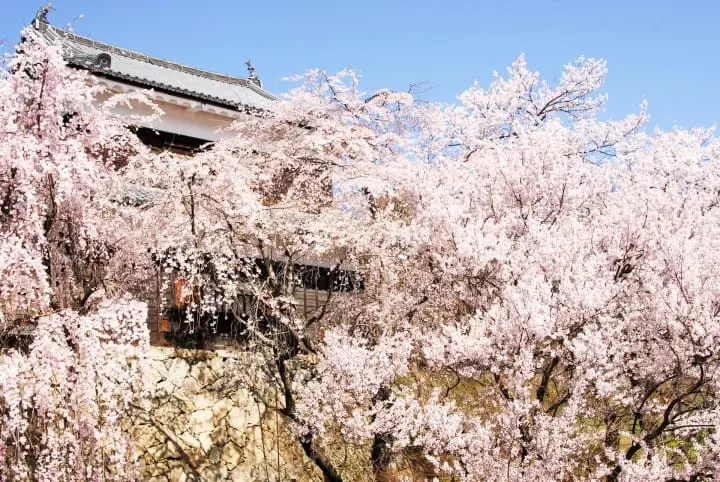
Botanical Highlights: Over a thousand trees spanning multiple species, anchored by classic Somei Yoshino, alongside Yamazakura, Ukon-zakura, Shidare-zakura (weeping cherry), Higan-zakura, Edo-higan-zakura, and Ryuto-zakura.
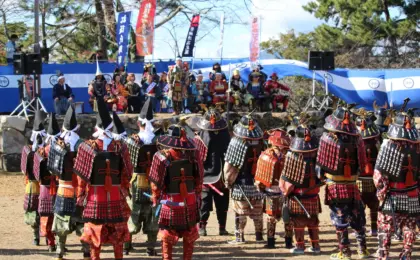
Cultural Context: Built by the clan of legendary samurai tactician Sanada Yukimura, Ueda Castle earned historical renown by twice repelling the massive invading armies of the Tokugawa clan. During the annual Cherry Blossom Festival, the park bridges centuries by allowing visitors to don authentic replicas of samurai armor, striking poses against a backdrop of soft spring blossoms. Night illuminations follow after dusk.
Logistics: Located at Ninomaru, Ueda City. Accessible via the JR Hokuriku Shinkansen to Ueda Station, followed by a straightforward 12-minute walk.
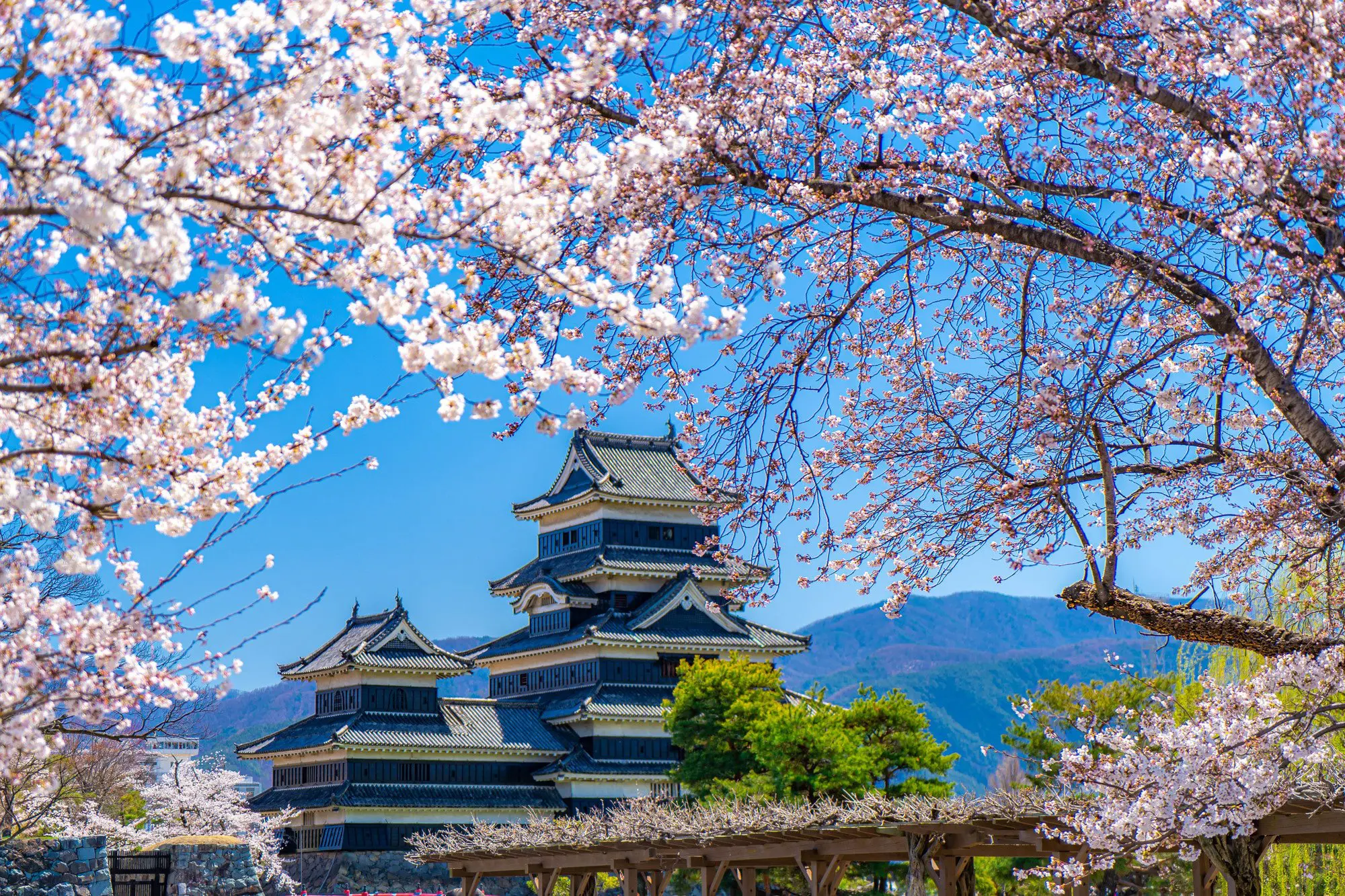
7. Matsumoto Castle: National Treasure and Alpine Contrast
Blooming Peak: April 8 – 14
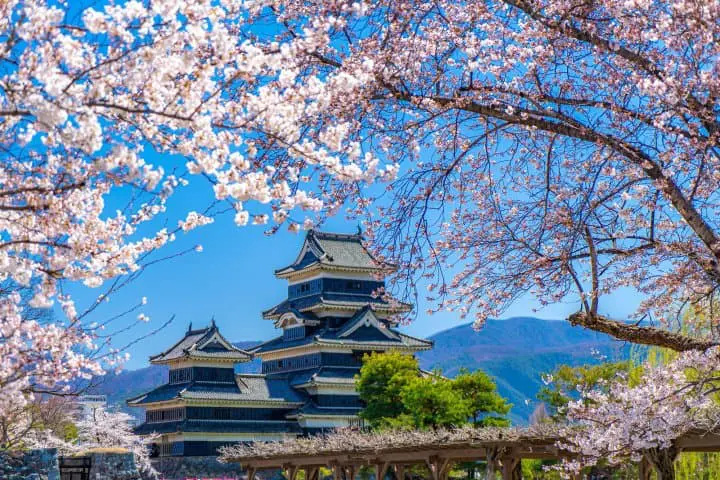
Botanical Highlights: A dense perimeter of pale pink blossoms framing a stark, two-tone architectural masterpiece.
Cultural Context: Designated as one of Japan’s five National Treasure castles, Matsumoto Castle features a primary tower constructed around 1593, making it the oldest surviving five-story, six-story castle keep in the country. Its contrasting black lacquer and white plaster walls provide a dramatic canvas for spring blooms. On clear days, the lingering snow atop the distant Northern Alps provides a breathtaking vertical horizon. Nighttime light-up events dramatically illuminate the moat and fortifications.
Logistics: Located at 4-1 Marunouchi, Matsumoto City. From JR Matsumoto Station (Chuo Main Line), take the Town Sneaker local bus (approx. 8 minutes) or walk 15 minutes.
8. Mamizuka Park: Layered Pink Hues and Central Alps Vistas
Blooming Peak: April 9 – 15
Botanical Highlights: A synchronized spring display where cherry blossoms and vivid azaleas bloom concurrently around a central reflecting pond.
Cultural Context: Historically designated as a royal breeding ground where elite horses were raised for presentation to the Imperial Court, the park today serves as a serene sanctuary. The multi-tiered pink hues reflect brilliantly off the water’s surface, framed by the majestic, snow-capped peaks of the Central Alps.
Logistics: Located at Akaho Fukuoka, Komagane City. Accessible via a 10-minute walk from Ina-Fukuoka Station on the JR Iida Line.
Phase 2: Mid-April (Temple Tranquility and Alpine Gateways)
As the seasonal wave climbs higher in elevation and moves across regional plateaus, temple gardens and highland railway hubs reach their peak.
3. Kozenji Temple: Pagodas, Moss, and Cascading Blossoms
Blooming Peak: April 10 – 16
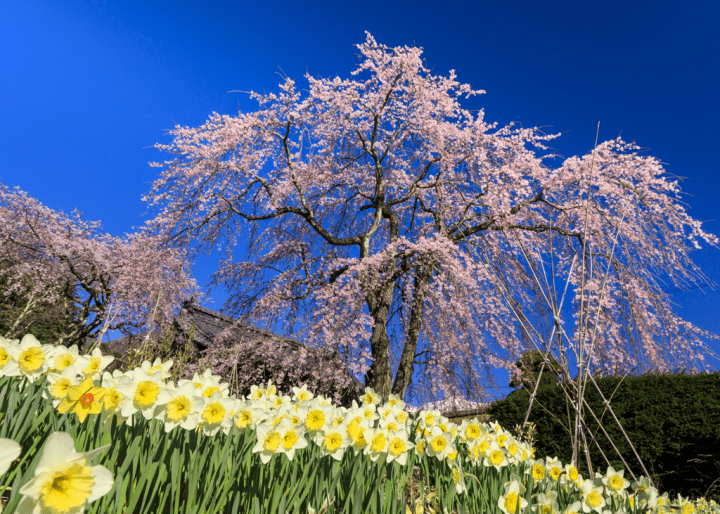
Botanical Highlights: Famous primarily for its rare, glowing luminous moss (hikikoke), the temple grounds transform into a botanical masterpiece in spring through cascading weeping cherry trees (shidare-zakura).
Cultural Context: When timed correctly, photographers can capture a quintessential Japanese spring composition in a single frame: golden carpets of blooming daffodils, cascading pink weeping cherry branches, and an iconic multi-tiered three-story pagoda. Evening illuminations accentuate the temple’s historic architecture.
Logistics: Located at 29 Akaho, Komagane City. Take a local bus for 9 minutes from JR Komagane Station (Iida Line), then walk 10 minutes.
4. Komoro Kaikoen Park: Nostalgia Near Karuizawa
Blooming Peak: April 9 – 15
Botanical Highlights: A diverse arboricultural collection highlighted by the Komoro Yae-beni-shidare—a rare, double-flowered weeping cherry variety endemic specifically to the city of Komoro.
Cultural Context: Listed among Japan’s Top 100 Castles and Top 100 Cherry Blossom Spots, this park sits just a short 25-minute rail journey from the upscale resort town of Karuizawa. It offers an ideal side trip for travelers navigating Nagano’s eastern highlands during mid-April.
Logistics: Located at 311 Cho, Komoro City. Take the Shinano Railway directly from Karuizawa Station to Komoro Station (approx. 25 minutes), followed by a 3-minute walk.
6. Kamikawa Riverbed: A Rare Sea of Pink and Gold
Blooming Peak: April 10 – 16
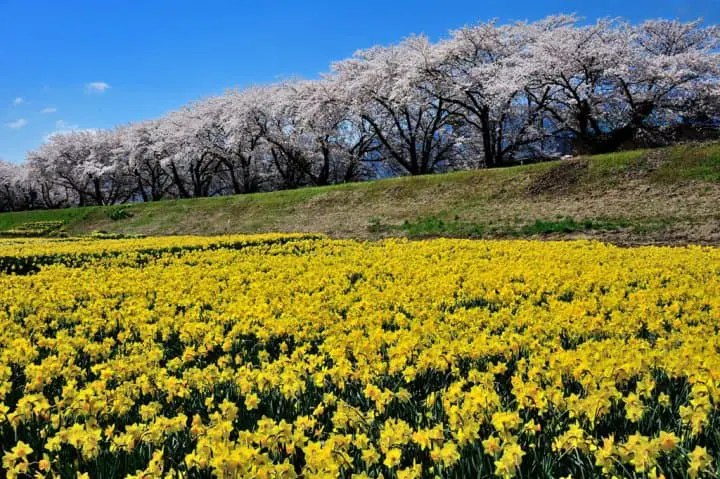
Botanical Highlights: A rare ecological convergence featuring a dense cherry blossom tunnel running parallel to a sprawling, uninterrupted carpet of bright yellow daffodils.
Cultural Context: Lacking official commercial signage or major tourist infrastructure, the Kamikawa Riverbed remains an untouched local secret near Lake Suwa. The striking chromatic contrast between the pink overhead canopy and the golden riverbanks creates one of Nagano’s most visually harmonious landscape pairings.
Logistics: Located near Kurumabashi, Akanuma, Suwa City. Accessible via a 15-minute drive or taxi from Kami-Suwa Station (JR Chuo Main Line).
Phase 3: Late April (High-Altitude Sanctuaries)
In the final weeks of April, the cherry blossom front retreats to Nagano’s high-altitude lakes and northern basins, offering quiet reflection away from the spring crowds.
5. Lake Nakatsuna: The Mirror of the North
Blooming Peak: April 20 – 26
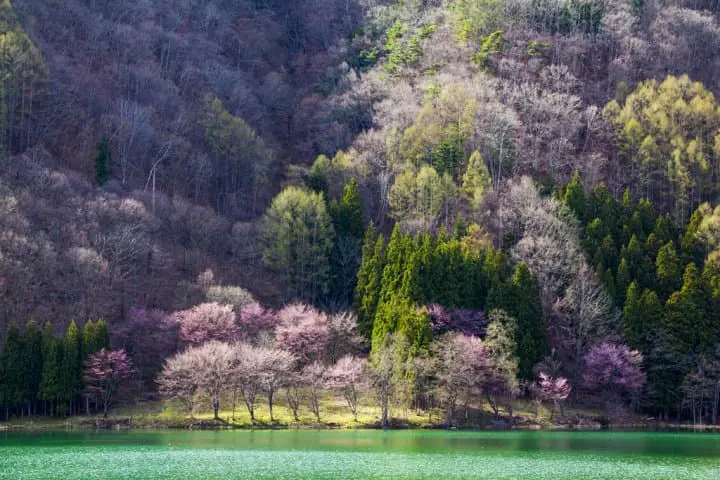
Botanical Highlights: Mature cherry trees lining the tranquil shores of an alpine lake known for absolute surface stillness.
Cultural Context: Because of its remote location away from major transit arteries, Lake Nakatsuna functions as a quiet sanctuary cherished by landscape photographers. The glassy water acts as an unblemished mirror, producing flawless reflections of the blossoming trees. Photographers arriving before dawn are rewarded with an eerie, beautiful scene: pale blossoms illuminated by moonlight, gradually wrapped in rising morning mist as the sun breaks over the water.
Logistics: Located in Taira, Omachi City. Just a 3-minute walk from Yanaba Station on the JR Oito Line. Express buses from Nagano Station toward Hakuba provide alternative regional access.
Horticultural experts and local municipal tourism boards emphasize that managing Nagano’s extended cherry blossom season requires careful synchronization with meteorological shifts.
According to regional forestry and parks officials:
"The unique topography of Nagano Prefecture—characterized by steep mountain ranges, profound elevation variances, and distinct climatic micro-basins—acts as a natural retardant to the rapid blooming patterns seen in lowland metropolitan regions. While urban centers experience a brief, volatile peak, Nagano’s vertical geography stretches the sakura season across nearly an entire month. This offers ecological resilience and provides visitors with an extended window to experience authentic seasonal transitions without encountering hyper-concentrated tourist foot traffic."
Furthermore, preservation societies overseeing sites such as Takato Castle Ruins Park and Matsumoto Castle maintain strict arboricultural protocols. Root-aeration projects, organic soil fertilization, and structural bracing are routinely deployed to protect centenarian trees, ensuring that historical specimens like the 140-year-old Takato-kohiganzakura continue to produce their signature deep-pink blooms for future generations.
Future Outlook: Sustainable Tourism and Off-the-Beaten-Path Exploration
As international interest in Japanese seasonal tourism rebounds to record highs, destination management organizations (DMOs) across Nagano Prefecture are shifting focus toward sustainable travel initiatives. Overtourism in core urban hubs like Kyoto has catalyzed a structural push to disperse travelers into regional prefectures like Nagano.
Strategic Recommendations for Travelers:
Embrace Regional Rail Passes: Utilizing rail networks such as the JR East Nagano-Niigata Area Pass allows seamless movement between sprawling valley hubs like Matsumoto and remote alpine outposts like Omachi.
Prioritize Off-Peak Hours: Locations such as Lake Nakatsuna and Kamikawa Riverbed rely heavily on pristine natural quiet. Visiting these sites during early morning hours (asagata) not only avoids minor vehicular congestion but also captures optimal lighting conditions for photography.
Respect Local Infrastructure: Many of Nagano’s hidden gems—such as the Kamikawa Riverbed—lack commercial tourist amenities. Travelers are advised to practice "leave no trace" principles, respect private agricultural boundaries surrounding rural temple grounds, and support local economies by purchasing regional goods from small-scale vendors.
By venturing beyond conventional metropolitan itineraries, travelers to Nagano are rewarded with an authentic, unhurried encounter with Japanese spring culture. Here, amid ancient castle ramparts and mist-shrouded mountain lakes, the true spirit of sakura reveals itself in its purest and most enduring form.








Belum ada komentar. Jadilah yang pertama berkomentar!