

Executive Overview
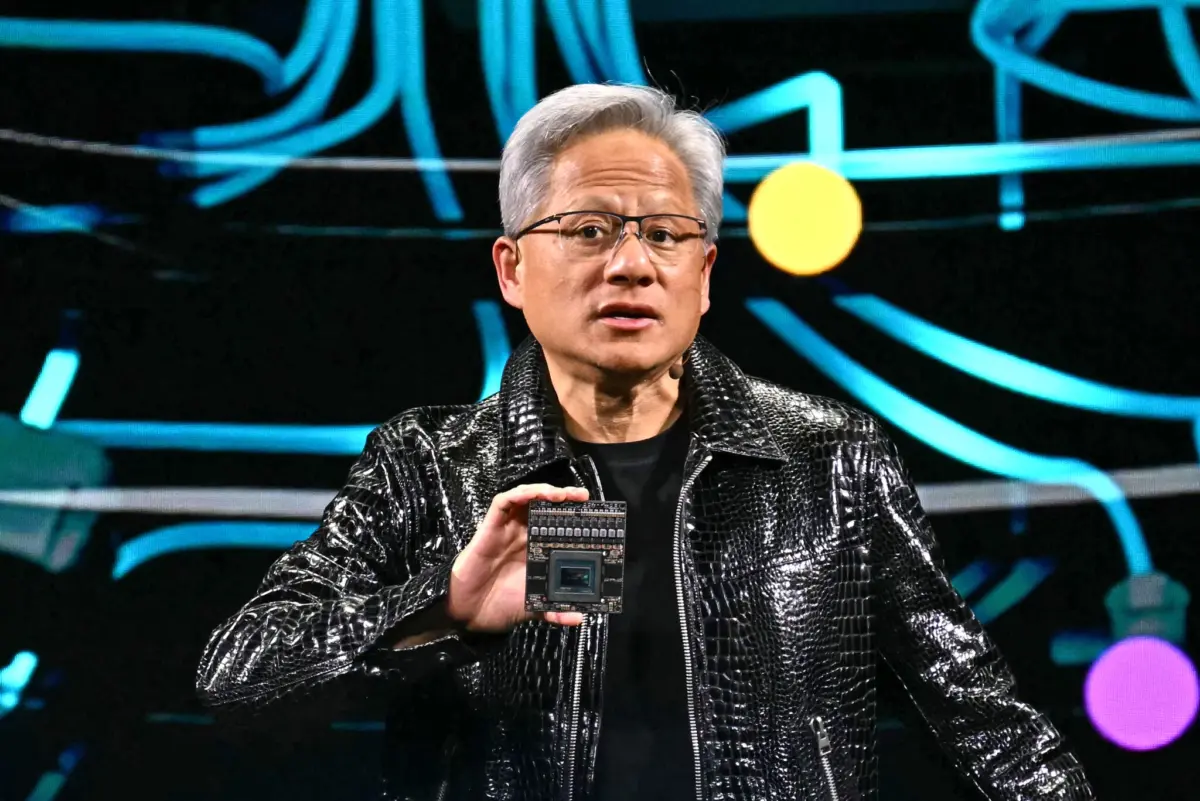
In what could easily become the defining technology transaction of the decade, semiconductor titan Nvidia has reportedly agreed to acquire Hugging Face, the premier open-source AI model repository and developer hub, for a staggering $12.9 billion. The deal, initially broken by The Information and corroborated by Business Insider, underscores a strategic realignment in the generative artificial intelligence sector. While negotiations are advancing rapidly, insiders caution that a formal, binding contract has yet to be finalized, leaving a narrow window for the agreement to potentially fluctuate or dissolve.
Should the deal close near its projected valuation of over $13 billion, it will fundamentally alter the dynamics of the global artificial intelligence ecosystem. For Nvidia, the acquisition provides an instant, dominant foothold in the open-source AI community—a sector rapidly gaining ground against proprietary, walled-garden models developed by tech giants such as OpenAI and Anthropic. More importantly, it secures a crucial defensive moat for Nvidia’s core hardware business at a time when major cloud providers and AI labs are aggressively designing their own custom silicon to reduce their reliance on Nvidia’s industry-standard GPUs.
For Hugging Face, a company founded in 2016 that has grown from a quirky chatbot startup into the undisputed town square for open-source machine learning, the buyout represents a high-stakes evolution. Having previously rejected a major $500 million investment offer from Nvidia late last year—a deal that would have valued the repository at $7 billion—Hugging Face’s leadership appears ready to integrate deeply with the world’s most valuable chipmaker.
This in-depth report examines the mechanics of the proposed acquisition, the strategic imperatives driving Nvidia and Hugging Face, the regulatory and geopolitical crosscurrents surrounding open-source AI, and the broader financial ramifications for the tech industry.
Detailed Chronology of the Deal
The path toward this blockbuster acquisition has been marked by escalating consolidation within the AI infrastructure layer, shifting geopolitical tensions, and a rapidly warming relationship between Nvidia CEO Jensen Huang and Hugging Face CEO Clem Delangue.
Early Resistance and Rebuffed Advances
The seeds of this partnership were planted long before this week’s headlines. Late last year, Nvidia approached Hugging Face with a massive $500 million investment offer that would have pegged the startup’s valuation at $7 billion. At the time, Hugging Face leadership rebuffed the overture. Executives were reportedly wary of taking on a single, hyper-dominant stakeholder that could exert undue influence over the neutral governance of an open repository used by millions of independent developers.
Instead, Hugging Face opted to finalize a $235 million Series C funding round in mid-2023 at a $4.5 billion valuation. Led by Salesforce Ventures, that round notably included participation from Alphabet’s GV, IBM Ventures, and Nvidia itself—a clear indicator that mutual strategic interests were already taking root.
The Rumor Mill and Leaks
Speculation regarding a full-scale takeover intensified over the weekend when Business Insider reported that Hugging Face was fielding active acquisition interest from multiple deep-pocketed suitors. By Wednesday night, the narrative crystallized. The Information published an exclusive report citing a source familiar with the matter, confirming that Nvidia had agreed in principle to buy Hugging Face for $12.9 billion. Concurrently, Business Insider reported that talks were ongoing to value the firm above $13 billion, though they stressed that final ink had not dried and the deal remained susceptible to last-minute shifts.
Notably, neither Nvidia nor Hugging Face responded to inquiries from tech publications seeking confirmation. In Nvidia’s case, this silence is deafening; the company has historically moved with lightning speed to publicly debunk or correct media reports it deems inaccurate. The absence of a denial has only poured fuel on the fire, convincing market watchers that a definitive announcement is imminent.
Strategic Imperatives: Why Nvidia Needs Hugging Face
To understand why Nvidia is willing to commit nearly $13 billion to acquire a company generating roughly $150 million in annual revenue, one must examine the existential pressures facing the world’s premier chipmaker.
Defending the GPU Monopoly
Nvidia’s unprecedented market capitalization is built on the near-universal adoption of its AI accelerators. However, the company’s monopoly is facing a coordinated challenge. Major "hyperscalers" and closed-source AI labs—including OpenAI, Google, Amazon, and Anthropic—are pouring billions of dollars into proprietary silicon development. Their ultimate goal is to break their dependency on Nvidia’s expensive hardware.
To counter this threat, Nvidia must ensure that the broader AI development ecosystem remains deeply incentivized to write code that thrives on its architecture. By controlling Hugging Face, Nvidia gains immense leverage over the open-source community. A thriving, expanding open-source AI ecosystem provides developers with viable alternatives to closed labs, ensuring sustained, insatiable demand for Nvidia’s high-performance GPUs. This explains why Nvidia has quietly poured tens of billions of dollars into backing and building open-source AI models over the past few years.
A Backdoor Return to Cloud Computing and Risk Mitigation
The acquisition also solves a strategic puzzle regarding Nvidia’s footprint in cloud services. Roughly a year ago, Nvidia scaled back its internal cloud initiative, known as DGX Cloud, after initially attempting to position itself as a cloud service provider.
Acquiring Hugging Face instantly resurrects Nvidia’s cloud strategy without the friction of building infrastructure from scratch. Hugging Face already operates a massive, highly utilized ecosystem where developers rent computing power to fine-tune and run their AI models.
Furthermore, the deal serves as a brilliant financial safety net. Nvidia has committed to backing tens of billions of dollars in cloud computing deals for its customers. If those enterprise clients ultimately fail to consume the vast amounts of computing capacity they have reserved, Nvidia runs the risk of absorbing billions in stranded cloud assets. Owning Hugging Face provides an organic, ready-made marketplace where Nvidia can redirect and monetize that unused cloud capacity through Hugging Face’s massive developer base.
Geopolitical Pressures and the Open-Source Debate
The timing of the acquisition coincides with a fierce Washington-centric debate regarding the national security implications of open-weight and open-source artificial intelligence.
The Rise of Efficient Open-Source Models
Over the past year, international labs—particularly in China, such as Moonshot AI with its Kimi K3 model—have released open-weight systems that rival top-tier U.S. proprietary models on standard benchmarks while operating at a fraction of the cost. This development panicked certain U.S. policymakers and national security hawks, who raised concerns that unchecked open-source dissemination could empower adversarial nations or bad actors.
Conversely, open-source advocates have pushed back fiercely against proposed government restrictions. Critics of the existing AI "duopoly" (Anthropic and OpenAI), including political figures like White House advisor David Sacks, have argued that fears surrounding open-weight models are deliberately overblown and propagated by closed-source giants attempting to pull up the drawbridge behind them.
Clem Delangue and the Pro-Open-Source Coalition
Hugging Face CEO Clem Delangue has positioned himself at the vanguard of the pro-open-source movement. Throughout 2026, Delangue has publicly aligned his company with Nvidia’s aggressive advocacy for open development.
In a high-profile appearance on CBS’s Face the Nation earlier this month, Delangue highlighted Hugging Face’s resilience, noting that the platform successfully utilized an Nvidia-modified version of a Chinese open-source model to defend its infrastructure following a cyberattack. He also pointed directly to a landmark industry letter—signed by Nvidia CEO Jensen Huang and executives from 24 other companies, including Hugging Face—urging the U.S. federal government to protect and support open-source models rather than enact crippling restrictions.
Delangue echoed these sentiments in a late July interview with CNBC, warning that China is currently "clearly dominating" the open-source AI race, making domestic support for open architectures an economic and geopolitical imperative. By folding into Nvidia, Hugging Face secures a powerhouse political and financial ally capable of navigating these treacherous regulatory waters.
Financial Metrics and Industry Comparables
From a purely financial standpoint, a $12.9 billion price tag represents an astronomical valuation multiple for a business of Hugging Face’s current size, yet it aligns with the hyper-inflated economics of the current AI boom.
Revenue Trajectory and Valuation Multiples
- The Valuation Jump: Hugging Face’s last official funding round in 2023 valued the company at $4.5 billion. A jump to nearly $13 billion represents nearly a threefold increase in value in just three years.
- Revenue Growth: The company has experienced blistering top-line expansion. According to The Information, Hugging Face recently crossed an annual run rate of approximately $150 million, up sharply from roughly $100 million just two months prior.
- Path to Profitability: In an interview with TechCrunch last month, CEO Clem Delangue noted that the company was getting "close to profitability."
While a $13 billion valuation on $150 million in revenue equates to an eye-watering forward price-to-sales multiple of roughly 86x, the acquisition must be evaluated through the lens of strategic asset scarcity rather than traditional SaaS metrics.
The M&A Ripple Effect: Stripe and OpenRouter
The proposed Nvidia-Hugging Face union is not occurring in a vacuum. The AI infrastructure and orchestration layer is undergoing rapid, aggressive consolidation.
A prime comparative benchmark is Stripe’s recent blockbuster acquisition of OpenRouter, a startup founded in early 2023 that acts as an "AI gateway," allowing customers to dynamically route tasks across different foundational models based on performance and budget. OpenRouter was valued at a modest $1.3 billion during a Series B funding round in May; however, Stripe reportedly swooped in earlier this month to acquire the startup for a staggering $7 billion.
In this hyper-competitive environment, foundational infrastructure startups are realizing that maintaining independence against trillion-dollar tech conglomerates is increasingly untenable. For Hugging Face, accepting a $13 billion cash-and-stock exit removes the existential pressure of scaling independently while offering immediate access to Nvidia’s virtually limitless balance sheet.
Future Outlook: What the Merger Means for Developers
As the technology world awaits formal confirmation of the deal, developers, competitors, and regulators are pondering the long-term ramifications of Nvidia swallowing the ultimate open-source AI repository.
Impact on the Open-Source Community
The central anxiety among Hugging Face’s user base is whether a corporate behemoth like Nvidia will alter the neutral, collaborative ethos that made the repository successful. Hugging Face currently hosts hundreds of thousands of models, datasets, and applications contributed by researchers from rival firms, including Google, Meta, Microsoft, and independent academic labs.
If Nvidia manages the platform with a heavy hand, favoring its own proprietary silicon optimizations or imposing restrictive enterprise terms, it risks alienating the very developers who populate the repository. However, industry analysts suggest that Nvidia is acutely aware of this risk. To preserve Hugging Face’s value, Nvidia will likely grant the platform a high degree of operational autonomy, treating it as an independent ecosystem engine much like Microsoft handles GitHub.
Market Consolidation and Antitrust Scrutiny
Given the immense regulatory scrutiny currently facing Big Tech regarding artificial intelligence acquisitions, antitrust regulators in both the United States and the European Union will undoubtedly scrutinize the transaction. Regulators will examine whether Nvidia is leveraging its dominant hardware monopoly to monopolize the software and repository layer of the AI stack.
Despite potential regulatory headwinds, the convergence of Nvidia and Hugging Face signals a maturation phase in the generative AI boom. The era of pure-play, independent AI repositories operating in isolation is rapidly giving way to deeply integrated, hardware-software conglomerates capable of commanding multi-billion-dollar valuations. If completed, the acquisition will cement Nvidia’s status not only as the undisputed hardware king of the AI era, but as the master architect of its entire software distribution pipeline.






Belum ada komentar. Jadilah yang pertama berkomentar!