

Executive Overview
Nestled in the heart of Mie Prefecture, flanked by the historical heavyweights of Kyoto and Nara, lies Matsusaka City—a destination where the echoes of feudal Japan reverberate through impeccably preserved merchant quarters, architectural marvels, and world-renowned gastronomy. While global travelers frequently flock to Japan’s more heavily commercialized urban centers, Matsusaka offers a deeply immersive, living museum experience that captures the ambition, enterprise, and refined aesthetic of the Edo period (1603–1867).
Historically celebrated as a stronghold of influential merchants and wealthy tycoons, Matsusaka shaped the economic, industrial, and cultural fabric of modern Japan. From its origins as a flourishing merchant town that supplied the sprawling populace of Edo (modern-day Tokyo) with vital textiles, to its status as the cradle of the legendary Mitsui financial dynasty, the city is steeped in historical significance. Today, local authorities, preservation societies, and cultural stewards invite domestic and international visitors alike to step into the past.
This comprehensive guide explores Matsusaka’s premier historical landmarks, traditional textile arts, and legendary culinary offerings. Whether wandering through the ancestral mansions of Edo-era magnates, donning traditional indigo-dyed Matsusaka Momen kimonos to unlock exclusive cultural access, or savoring melt-in-the-mouth Matsusaka beef at the historic Wadakin restaurant, travelers will find that Matsusaka provides an unmatched window into Japan’s rich heritage. Conveniently located just a ten-minute walk from JR/Kintetsu Matsusaka Station, the city serves as an ideal day-trip destination or an extended cultural retreat.

Detailed Chronology & Historical Landmarks
To truly understand Matsusaka, one must examine the chronological development of its merchant culture, which transformed a regional castle town into an economic powerhouse of early modern Japan.
The Ozu Seizaemon Family Mansion: A Monument to Edo-Era Commerce
The legacy of Matsusaka’s wealthy merchant class is perhaps best preserved at the Ozu Seizaemon Family Mansion. Ozu Seizaemon stood at the pinnacle of Edo-period commerce, operating what was once the largest paper wholesaler in the capital city of Edo. Today, his ancestral home functions as a public museum managed under the auspices of the Matsusaka Regional Culture andization Foundation.
Visitors walking through the complex encounter a remarkably intact estate featuring a sprawling main residential house, multiple secure storehouses (kura), and a historic front storehouse. Constructed in the classic townhouse (machiya) architectural style of the Edo period, these structures offer an unvarnished look at the domestic and professional lives of Japan’s mercantile elite. The property has been rightfully designated as a Tangible Cultural Property by Mie Prefecture and a Historic Site by Matsusaka City.

- Address: 2195 Matsusaka City, Mie Prefecture, 515-0081
- Opening Hours: 9:00 AM – 5:00 PM (Final entry at 4:30 PM)
- Closed: Wednesdays (or the following weekday if Wednesday falls on a public holiday), New Year holidays
- Admission Fee: Adults: 200 yen; Children (ages 6–18): 100 yen
- Access: Approximately a 10-minute walk from JR/Kintetsu Matsusaka Station
The Birthplace of Mitsui Takatoshi and the Wealthy Merchant Pocket Park
Few family names resonate as powerfully within global finance and Japanese industry as Mitsui. The founder of the legendary Mitsui Zaibatsu—a financial conglomerate whose modern corporate descendants continue to steer Japan’s economy—was Mitsui Takatoshi (1622–1694), who was born right here in Matsusaka.
While the ancestral homestead itself is private property and generally closed to the public, the sacred site remains marked by a historic stone monument and the very well used for Takatoshi’s first ceremonial bath. Just a short distance from this ancestral foundation lies the Wealthy Merchant Pocket Park, a tribute to the family’s enduring global footprint.
The park is anchored by a magnificent lion statue, an unmistakable cultural nod to the family’s commercial history. Takatoshi established Echigoya, a dry-goods store in Edo that eventually evolved into the beloved Mitsukoshi Department Store. To honor this heritage, a replica of the iconic Mitsukoshi lion statue—itself modeled after the famous lions guarding Nelson’s Column in London’s Trafalgar Square—was gifted to Matsusaka. Local lore maintains that straddling or sitting on the back of this bronze lion brings good fortune and makes wishes come true, making it a favorite photo spot for visitors seeking a blend of whimsy and historical luck.

- Address: 2176-10 Matsusaka City, Mie Prefecture, 515-0081 (Pocket Park)
- Access: Approximately a 10-minute walk from JR/Kintetsu Matsusaka Station
The Hasegawa Family Residence: Cotton Fortunes and Tranquil Gardens
Alongside the Mitsui and Ozu lineages, the Hasegawa family ruled over Matsusaka’s commercial landscape as masters of the "Tamba" cotton wholesale enterprise. Their sprawling residential compound stands as a testament to the staggering wealth generated by the textile trade during the feudal era.
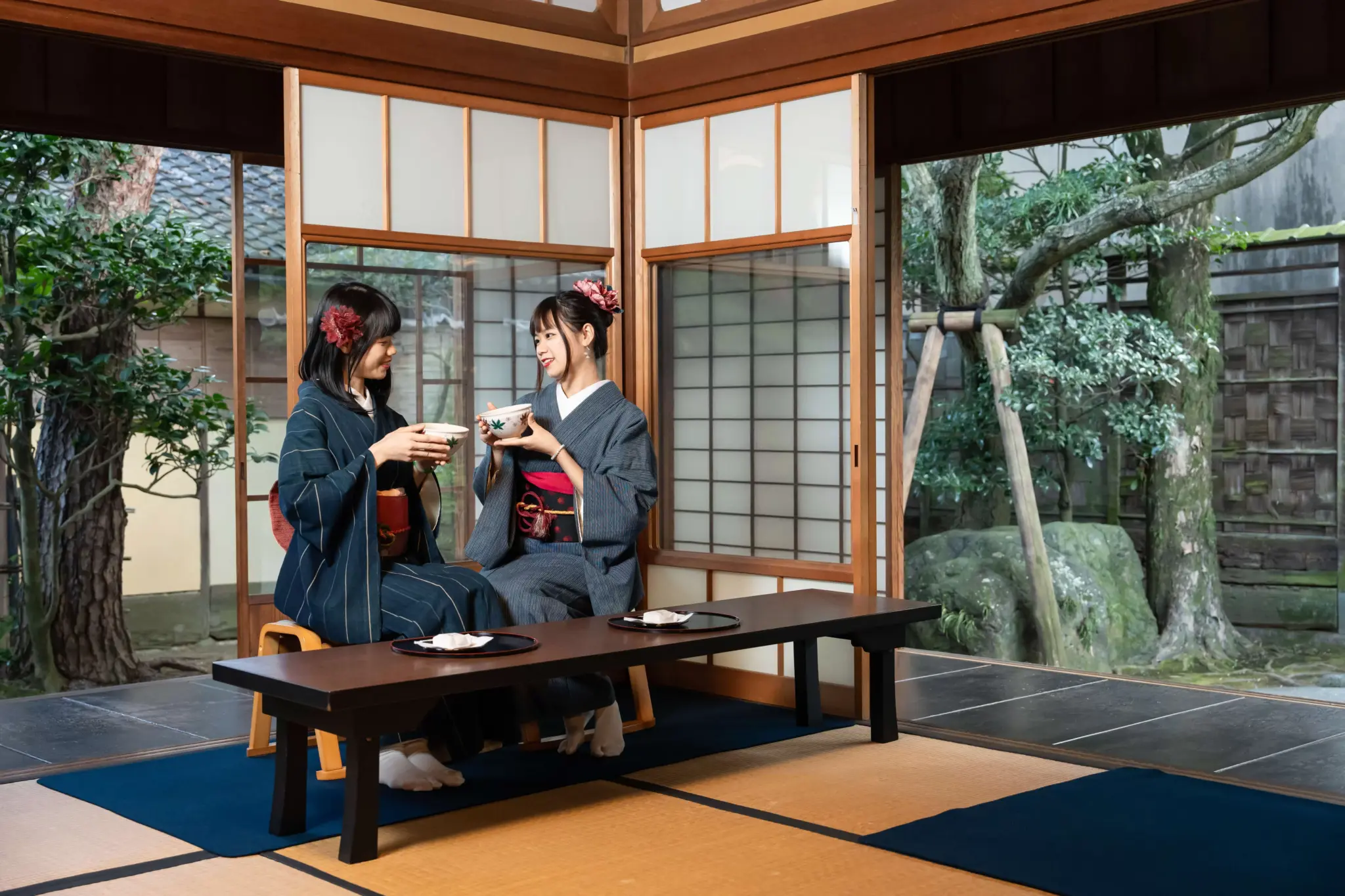
Unlike sites that merely display empty rooms, the Hasegawa family home preserves an astonishing archive of commercial documents, ancient manuscripts, and daily ledgers. These artifacts provide historians with invaluable primary sources regarding early modern supply chains and merchant operations. Beyond its historical archive, the estate boasts a stunning traditional Japanese garden where visitors can partake in authentic matcha green tea while overlooking tranquil landscapes. The garden undergoes a breathtaking transformation in late autumn, framing vibrant crimson maple leaves that draw photographers and nature lovers from across the prefecture. The property holds dual designations as a Nationally Designated Important Cultural Property and a Mie Prefecture Designated Historic Site and Scenic Spot.
- Address: 1653 Matsusaka City, Mie Prefecture, 515-0082
- Opening Hours: 9:00 AM – 5:00 PM (Final entry at 4:30 PM)
- Closed: Wednesdays (or the following weekday if Wednesday is a public holiday), New Year holidays
- Admission Fee: Adults: 400 yen; Children (ages 6–18): 200 yen
- Access: Approximately a 10-minute walk from JR/Kintetsu Matsusaka Station
Supporting Context & Metrics: The Phenomenon of Matsusaka Momen
No exploration of Matsusaka’s historical economy is complete without examining Matsusaka Momen (Matsusaka Cotton), the textile that fueled the city’s golden age.

The Fabric That Dressed Edo
Introduced to the fashion capitals of feudal Japan by savvy merchants like the Hasegawa family, Matsusaka Momen quickly became a sensation among the urban populace of Edo. During an era when Edo’s population hovered around one million, an astonishing over 500,000 bolts of Matsusaka cotton fabric were shipped annually from this regional hub.
The fabric is characterized by its use of yarn dyed with natural indigo, woven into subtle, sophisticated striped patterns known as Matsusakajima. From a distance, garments crafted from Matsusaka Momen appear deceptively understated and solid in color. However, upon closer inspection, the intricate interplay of fine, chic indigo stripes reveals itself—a design philosophy deeply aligned with the Edo-period aesthetic of iki (refined urban sophistication).
Experiencing the Craft Today
Modern travelers can interact directly with this living textile tradition at the Matsusaka Cotton Hand-Weaving Center, located on the first floor of the Matsusaka City Industrial Promotion Center. Here, visitors can purchase exquisite handmade goods or participate in hands-on weaving workshops to craft their own textile pieces under the guidance of local artisans.

- Address: 1F Matsusaka City Industrial Promotion Center, 2176 Honmachi, Matsusaka City, Mie Prefecture, 515-0081
- Opening Hours: 9:00 AM – 5:00 PM
- Closed: Tuesdays
- Access: Approximately a 10-minute walk from JR/Kintetsu Matsusaka Station
Stepping Back in Time: Kimono Rental Incentives
To amplify the historical immersion, travelers can rent authentic Matsusaka Momen kimonos through local municipal tourism initiatives (such as the Matsusaka Momen Kimono Rental Center). In a progressive move to encourage heritage tourism, the city grants free admission to several major cultural facilities for any visitor wearing a Matsusaka Momen kimono.
Applicable Free-Admission Facilities Include:
- Motoori Norinaga Memorial Museum
- Matsusaka City Cultural Properties Center
- Matsusaka City History and Folklore Museum
- Matsuura Takeshiro Memorial Museum
Walking down historical lanes draped in indigo-striped cotton offers a sensory portal to the past, creating picturesque moments that feel indistinguishable from time travel.

Official Statements and Cultural Stewardship
Local municipal authorities and tourism boards continue to prioritize the preservation and international promotion of Matsusaka’s cultural assets. Through sustained investment in historical conservation, the city aims to balance modern infrastructural accessibility with the preservation of its Edo-period streetscapes.
According to municipal tourism representatives, the collaborative effort between local heritage foundations and traditional artisans is designed to ensure that intangible cultural heritage—such as indigo-dyeing techniques and hand-weaving methodologies—is passed down to future generations. The integration of community-driven incentives, such as the kimono-rental admission waivers, underscores a strategic shift toward experiential, sustainable tourism that directly benefits local small businesses, traditional craftsmen, and historic preservation funds.
Official informational portals managed by the municipal government provide comprehensive multilingual resources to assist international travelers in navigating these historical quarters, ensuring that the legacy of Matsusaka’s merchant kings remains accessible to a global audience.

Culinary Excellence: The Legend of Wadakin and Matsusaka Beef
A journey through Matsusaka inevitably culminates in a legendary culinary experience. Alongside Kobe and Omi beef, Matsusaka beef stands universally recognized as one of Japan’s "Three Great Wagyu Beef Varieties" (Nihon Sandai Gyū). Renowned for its exquisite marbling, delicate texture, and rich, melt-in-the-mouth umami flavor, authentic Matsusaka beef is a product of rigorous breeding standards and meticulous cattle husbandry within the surrounding region.
While numerous fine dining establishments throughout the city serve this culinary masterpiece, few carry the historical prestige of Wadakin. Operating as a long-established, premier sukiyaki institution, Wadakin attracts discerning epicures and travelers from across the Japanese archipelago and beyond.
The restaurant specializes in preparing thick-sliced, masterfully marbled Matsusaka beef cooked tableside in traditional sukiyaki style, balancing savory-sweet artisanal broths with the unmatched richness of prime wagyu. For culinary tourists, partaking in a sukiyaki course at Wadakin serves as the ultimate punctuation mark to a day of historical exploration.

- Address: 1878 Matsusaka City, Mie Prefecture, 515-0081
- Business Hours:
- Weekdays: 11:30 AM – 7:00 PM (Last Order: 8:00 PM; Closing: 9:00 PM)
- Weekends & Holidays: 11:00 AM – 7:00 PM (Last Order: 8:00 PM; Closing: 9:00 PM)
- Closed Days: Please verify specific closures via the official website.
- Access: Approximately a 10-minute walk from JR/Kintetsu Matsusaka Station
- Official Website: Wadakin English Portal
Future Outlook
As cultural tourism evolves in the post-pandemic era, Matsusaka City is uniquely positioned to capture the growing international demand for authentic, uncrowded, and deeply historical Japanese destinations. By bridging the gap between high-end culinary tourism, textile heritage preservation, and interactive Edo-period architecture, Matsusaka transcends the typical definition of a regional stopover.
Future municipal initiatives aim to expand English-language digital wayfinding, enhance artisan residency programs for traditional weavers, and further integrate sustainable transport corridors connecting the station district directly to outlying historical assets. For travelers seeking to move beyond the well-worn tourist paths of Tokyo and Kyoto, Matsusaka offers an authoritative, enriching, and unforgettable encounter with the foundational pillars of Japanese history and commerce.






Belum ada komentar. Jadilah yang pertama berkomentar!