For nearly two decades, the digital economy has been tethered to a single, ubiquitous paradigm: the mobile app. From hailing rides and ordering groceries to managing corporate balance sheets and dating, consumers and enterprises alike have relied on the ritual of downloading, installing, and navigating dedicated software applications.
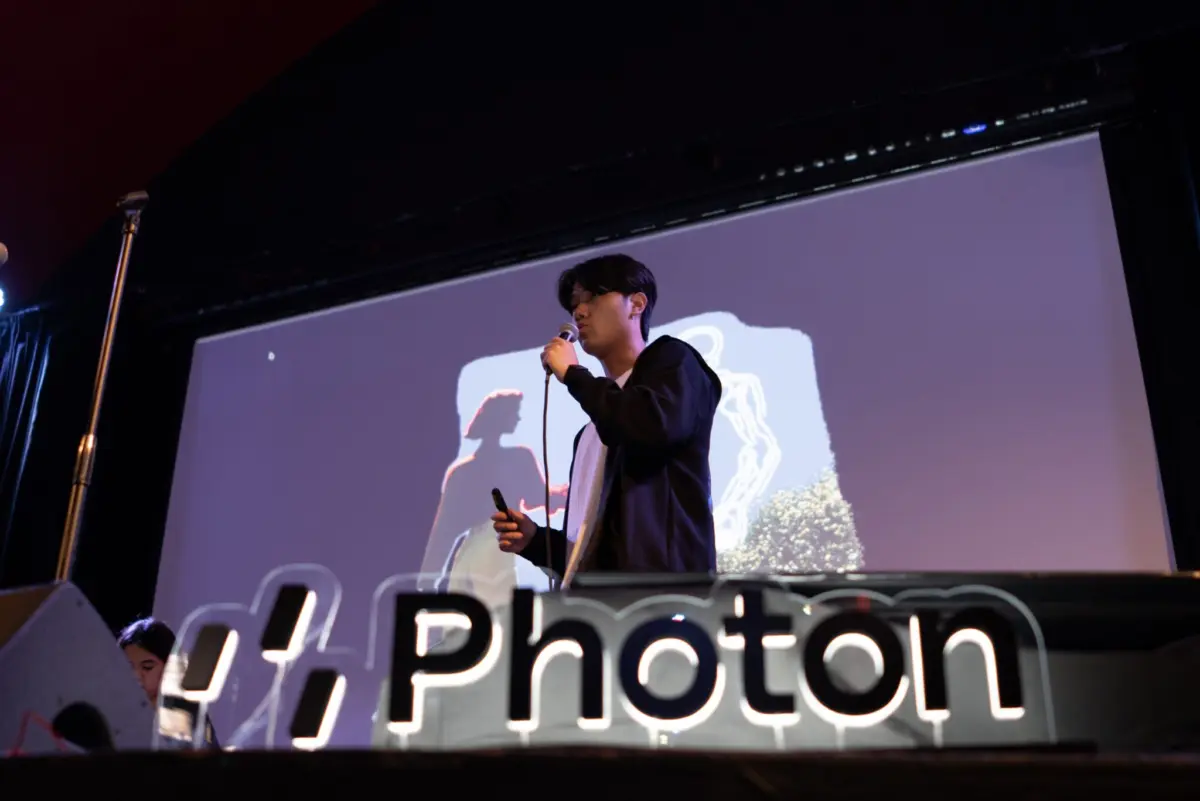
However, a burgeoning artificial intelligence startup called Photon believes this era is drawing to a close. Betting heavily on the premise that autonomous conversational agents will ultimately supersede traditional user interfaces, the company recently made headlines by hosting a literal funeral for app icons complete with a coffin, floral arrangements, and eulogies inside a San Francisco church.
While the "app funeral" held on September 17 was undeniably tongue-in-cheek, Photon’s underlying business thesis is dead serious. The company is building developer infrastructure designed to allow artificial intelligence agents to operate seamlessly across everyday communication channels like iMessage, WhatsApp, Telegram, SMS, RCS, email, and voice. Rather than forcing users to download a standalone app, Photon enables software to live where users already spend their time: inside their messaging threads.
This bold vision has quickly captured the attention of top-tier investors and the broader developer ecosystem. Photon announced it has secured $4.5 million in seed funding in a round co-led by Gradient and A*, with participation from prominent industry players including Vercel, HongShan, Z Fellows, Llama Ventures, Karman, and notable angel investors. The capital injection follows a period of hyper-growth for the startup, which reports a tenfold increase in revenue over just four months, a meager 3% customer churn rate, and an influx of more than 40,000 developer sign-ups.
As the software industry navigates the disruptive currents of generative AI, Photon is positioning itself as the foundational plumbing for the agentic web. By bridging the gap between large language models and legacy communication protocols, the startup is not just challenging how software is distributed—it is questioning whether the application icon has any reason to exist at all.
Detailed Chronology: From Hackathon Project to Venture-Backed Movement
The origins of Photon trace back to the classic Silicon Valley playbook of student ambition, hackathons, and open-source tinkering. Co-founders Daniel Tian, who served as CEO, and Ryan Zhu, the company’s Chief Technology Officer, spent their formative years building consumer applications while juggling their academic pursuits.
Time and again, Tian and Zhu encountered the single greatest bottleneck plaguing modern software development: user acquisition and distribution. No matter how innovative or polished an application was, convincing users to discover, download, and retain a standalone app proved intensely difficult in a saturated market.
The turning point arrived when the co-founders began experimenting with conversational interfaces. Recognizing that consumers were already deeply habituated to messaging platforms, Tian built an experimental bot designed to text his friends back on his behalf over Apple’s iMessage. Realizing the viral potential of embedding utility directly inside existing chat threads, the duo open-sourced the underlying technology on GitHub.
The response from the developer community was immediate and overwhelming. Thousands of developers quickly adopted the repository, signaling an intense, unmet appetite for tools that could bridge custom software logic with conversational channels. Confronted with this organic momentum, the founders made life-altering decisions: Tian dropped out of the University of Pennsylvania’s prestigious Jerome Fisher Program in Management and Technology (M&T), while Zhu left high school behind, later becoming a visiting student at the Massachusetts Institute of Technology’s (MIT) Media Lab.
From Open-Source Utility to Enterprise Infrastructure
For the early stages of its lifecycle, Photon operated almost entirely as an open-source utility, a dynamic that still accounts for roughly 98% of its total usage. However, as enterprise adoption accelerated, the limitations of self-hosted, local configurations became apparent.
In April, Tian and Zhu formally transitioned from a pure open-source project to a managed platform monetized via tiered subscriptions. This hosted incarnation of Photon delivered critical infrastructure upgrades, including 99.95% uptime—a stark contrast to running local scripts on a personal Mac for a weekend hobby project. Furthermore, the managed platform achieved SOC 2 Type II and HIPAA compliance, unlocking high-stakes vertical markets such as healthcare, fintech, and enterprise business intelligence where data security and regulatory compliance are non-negotiable.
The culmination of this rapid evolution was the company’s San Francisco developer day and "app funeral" on September 17. Featuring panels and technical deep dives from industry giants like Vercel, Stripe, and OpenAI, the event served as both a celebration of the startup’s rapid community adoption and a theatrical declaration of war against the traditional app store ecosystem.
Supporting Context & Metrics: Traction in a Crowded AI Landscape
Photon enters a crowded ecosystem where tech behemoths and nimble startups alike are racing to define the post-app era. Meta, for instance, has captured consumer imagination with its Muse AI application, which rapidly surged to the number-one spot across mainstream app stores.
Yet, Photon’s leadership views such developments not as a threat, but as validation of a broader structural shift. Even if consumer-facing giants dominate branded application spaces, developers will still require robust back-end middleware to distribute their specialized tools across fragmented messaging channels.
Photon fulfills this need by offering a comprehensive suite of developer tools, which includes:
A Unified API: Simplifies the integration of conversational workflows across disparate messaging applications.
An Extensible Channel Framework: Allows developers to deploy agents across iMessage, WhatsApp, Telegram, SMS, RCS, email, and voice interfaces.
A Command-Line Interface (CLI): Streamlines local development and deployment pipelines.
An Observability Suite: Provides monitoring, debugging, and analytics for autonomous agent behavior in production environments.
Unprecedented Growth Metrics
The market reception to Photon’s tooling has broken conventional growth curves. While the company has opted not to disclose absolute revenue figures, the underlying metrics illustrate explosive compounding:
10x Revenue Growth: Achieved over a compressed four-month window following the launch of its managed subscription platform.
40,000+ Developer Sign-Ups: Demonstrating a massive grass-roots developer footprint.
Sub-3% Churn Rate: Indicating high product-market fit and deep operational reliance among active users.
5x Message Volume Expansion: Recorded in a single recent month, reflecting exponential growth in end-user engagement.
Photon’s client roster spans a diverse array of verticals, proving that agentic workflows are not limited to generic chatbots. Current enterprise users include Corgi Insurance, social introductions application Boardy, Gen Z dating platform Ditto, business banking pioneer Rho, finance-focused AI assistant Fliptexts, and AI-powered email client Slashy.
Furthermore, the startup’s technical integrations read like a who’s who of modern web and AI infrastructure. Photon serves as the default iMessage layer for Nous Research’s Hermes agent and powers Tencent’s QClaw and NanoClaw. In addition, it boasts framework and infrastructure integrations with industry standards such as LangChain, Mastra, Convex, Render, Railway, Telnyx, and Vercel—which also participated as a financial backer in the company’s recent seed round.
Official Statements and Industry Philosophy
The ideological core of Photon rests on the conviction that user friction is the ultimate killer of software adoption. In a recent interview, co-founder and CEO Daniel Tian articulated the company’s long-term philosophy regarding the death of the traditional application interface.
"Honestly, it’s going to take a while, but I think, directionally, it’s inevitable," Tian stated, reflecting on the slow-motion displacement of app stores by conversational agents.
Tian elaborates that the modern consumer suffers from "app fatigue." Asking a user to discover a service in an app store, download a 100-megabyte binary file, create an account, and navigate a bespoke graphical user interface (GUI) represents an immense amount of friction. By contrast, interacting with an agent via an existing chat application reduces the onboarding barrier to zero.
This philosophy was literalized during the San Francisco app funeral, where developers gathered to mourn the constraints of rigid screen layouts, push notification fatigue, and platform store fees. By placing miniature app icons into a ceremonial coffin, Photon aimed to provoke a serious industry conversation about user experience design in the age of generative models.
Investors share this aggressive long-term outlook. Co-investors Gradient and A* recognized that as autonomous agents become more capable of executing multi-step workflows—such as booking flights, filing insurance claims, or executing financial trades—the interface will naturally migrate away from siloed applications and toward ubiquitous text and voice channels.
Future Outlook: The Dawn of Agent-to-Agent Communication
While Photon’s current operations focus heavily on bridging the communication gap between human users and software agents (Human-to-Agent, or H-to-A interaction), Tian and his team are already looking ahead to the next frontier of digital architecture.
The ultimate evolution of the AI economy, according to Photon, will not merely involve humans talking to bots, but bots talking to other bots on behalf of humans. This paradigm—often referred to as Agent-to-Agent (A-to-A) communication—promises to entirely reorganize how digital services are discovered, negotiated, and consumed.
"I think, in the future, agents will be able to find you the agent that can do the right things—so it’s going to be the A-to-A communication layer," Tian explained.
To visualize this future, consider a scenario where a user is conversing with their primary personal AI assistant to coordinate a complex international vacation. Rather than forcing the user to manually switch between airline, hotel, and car rental platforms, the primary assistant will seamlessly interface with specialized background agents. The travel planning agent will autonomously query a flight-booking agent, negotiate with a hotel reservation agent, and synthesize the final itinerary—all behind the scenes, culminating in a streamlined summary delivered directly to the user’s preferred messaging thread.
This multi-tiered ecosystem—characterized by what Tian calls the Agent-to-Agent-to-Person (A-to-A-to-P) dynamic—transforms infrastructure providers like Photon from simple messaging wrappers into the core routing network of the autonomous web.
As Photon deploys its $4.5 million seed war chest to scale its engineering talent, expand enterprise compliance, and refine its unified API, the startup stands at the vanguard of a profound technological transition. Whether traditional mobile apps vanish overnight or fade away gradually over the coming decade, Photon has successfully staked its claim as a primary architect of the post-app world—proving that sometimes, to build the future of software, you first have to bury its past.













Belum ada komentar. Jadilah yang pertama berkomentar!