

Executive Overview
In recent years, the delicate balance between human recreation and wildlife habitats in Japan has faced an unprecedented strain. Driven by environmental shifts, habitat fragmentation, and dwindling natural food sources, wild bears have increasingly encroached upon human-dominated landscapes. This pervasive phenomenon has fundamentally altered the daily lives of residents, influenced national discourse—culminating in the character for "bear" (kuma) being voted Japan’s Kanji of the Year for 2025—and now, new mobility data reveals it is dramatically reshaping outdoor recreation.
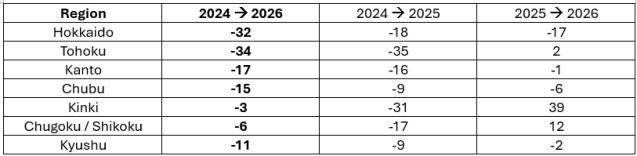
Groundbreaking behavioral data collected by the smartphone location platform Beacon Bank indicates a significant decline in foot traffic across Japan’s iconic peaks. Tracking human movement patterns on the country’s revered 100 Famous Mountains during the critical spring seasons of 2024, 2025, and 2026, the analytics reveal a nationwide drop in mountain climbing activity. The spring period—spanning April through June—is particularly vital, marking the time when bears emerge from hibernation with voracious appetites, scavenging for fresh mountain vegetation.
While the data does not establish absolute direct causation, the geographic consistency of the decline strongly correlates with regions experiencing the most severe spikes in wildlife sightings. From an 18 percent national contraction to staggering regional drops of up to 34 percent in the northeastern Tohoku district, Japan’s outdoor enthusiasts are increasingly choosing caution over conquest, opting to stay clear of the nation’s majestic trails.
Detailed Chronology: The Escalation of Human-Wildlife Conflict
To understand the current hesitation among Japanese hikers and climbers, one must trace the rapid escalation of bear sightings and encounters over the past several years. The issue has evolved from a series of isolated rural incidents into a national security and public safety concern.
2022–2023: The Warning Signs
For years, local municipalities in rural Japan managed seasonal wildlife interactions with standard preventative measures. However, the situation escalated dramatically heading into the mid-2020s. According to data released by Japan’s Ministry of the Environment, the year 2023 recorded a staggering 20,513 bear sightings nationwide. The northeastern region of Tohoku quickly emerged as the epicenter of this surge, accounting for the vast majority of reports. Communities that historically coexisted peacefully with local wildlife found themselves erecting emergency fencing, deploying automated deterrents, and issuing daily safety broadcasts.
2024: The Shift in Human Behavior Begins
By the spring of 2024, the psychological impact of these persistent warnings began to register in movement data. Beacon Bank’s analysis of smartphone GPS tracking—focusing on individuals entering a 500-meter radius of mountain summits—revealed the first wave of retreat. On a national level, mountain climbing participation dropped by 18 percent compared to baseline metrics. Hikers, traditionally undeterred by moderate weather or standard trail difficulties, began bypassing classic climbing routes, reflecting a growing public apprehension.

2025: The Acorn Shortage and National Anxiety
If 2024 served as a warning, 2025 was a watershed moment. A catastrophic failure in the harvest of acorns, beechnuts, and other mast crops—the primary dietary staples of Asian black bears and brown bears heading into winter—triggered an unprecedented ecological crisis. Deprived of forest sustenance, bears flooded out of mountainous terrain in search of calories, venturing deeper into suburban and urban areas.
The nationwide sighting count exploded to an astonishing 50,801 incidents in 2025, with Tohoku bearing the brunt of the crisis as 70 percent of all regional sightings concentrated there. The omnipresence of the issue in daily news broadcasts cemented public fear, leading the Japanese public to vote kuma (bear) as the official Kanji of the Year for 2025 in an exceptionally close national vote.
2026: The New Normal on the Trails
As of mid-2026, preliminary data indicates that while the frantic panic of the 2025 acorn famine has stabilized, human behavior has permanently shifted. Spring 2026 data shows that while overall movement has not plummeted further from 2025 levels, it remains depressed compared to pre-crisis baselines. Preliminary figures for June 2026 alone recorded 6,260 bear sightings—the highest mark for the month of June since 2022—proving that the wildlife pressure on mountain ecosystems has not abated.
Supporting Context & Metrics: Analyzing the Beacon Bank Data
Beacon Bank’s behavioral big data platform offers an empirical lens through which to view this sociological shift. By capturing anonymous smartphone GPS data surrounding the summits of Japan’s 100 Famous Mountains (a prestigious registry compiled by mountaineer Kyuya Fukada in 1964), researchers mapped the changing contours of Japanese outdoor recreation.
National Trends
Across the board, the data paints a picture of a retreating populace.
- National Level: A consistent 18 percent decline in human presence near mountain summits has been recorded since the spring of 2024.
- Seasonality: The focus on the April-to-June window captures the peak period of post-hibernation foraging, a time when human-bear overlap historically reaches its annual crescendo.
Regional Divergence: Tohoku vs. Kyushu
The impact of the bear crisis is not felt uniformly across the archipelago, highlighting a stark geographic divide between regions with heavy wildlife populations and those relatively free of large terrestrial predators.

- The Tohoku Region (Northeastern Japan): Tohoku has experienced the most severe contraction in outdoor recreation. Mountain climbing metrics here plummeted by an incredible 34 percent over the past two years. This aligns directly with environmental data: Tohoku consistently records the highest concentration of bear sightings in the country, capturing roughly 70 percent of nationwide reports during peak crisis periods. For residents of prefectures like Iwate, Fukushima, and Aomori, the mountains have transitioned from weekend leisure destinations to zones of heightened ecological risk.
- The Kyushu Region (Southern Japan): In sharp contrast to the bear-heavy north, southern Japan tells an entirely different story. Mt. Kaimon in Kagoshima Prefecture, located on the southernmost major island of Kyushu where wild bear populations are historically absent or negligible, experienced an 18 percent increase in climbers over the same timeframe. This divergence underscores that the drop in northern climbing is driven primarily by local environmental hazards rather than a generalized national disinterest in mountaineering.
Individual Mountain Breakdown
Analyzing a subset of 23 mountains with the most robust and reliable GPS data streams reveals acute local anomalies:
- Mt. Hachimantai (Iwate/Akita Prefectures): Situated in the heart of the Tohoku region, this volcanic plateau experienced the steepest drop among all surveyed peaks, with climber traffic falling by a massive 46 percent over two years.
- Other Affected Peaks: Iconic northern and central alpine routes similarly show double-digit declines, as local prefectural governments issue continuous advisories, urge hikers to carry specialized deterrents, and occasionally close specific trailheads following verified predator sightings.
| Geographic Scope | Metric / Focus Area | Change / Finding | Context |
|---|---|---|---|
| National | Overall Mountain Climbers | -18% | Drop in foot traffic near summits compared to 2024 baseline. |
| Tohoku Region | Regional Climber Activity | -34% | Heaviest hit region due to soaring bear sightings (over 50,000 in 2025). |
| Mt. Hachimantai | Individual Peak (Iwate) | -46% | Largest individual mountain percentage drop among reliable datasets. |
| Mt. Kaimon | Individual Peak (Kagoshima) | +18% | Southern peak experiencing growth, unaffected by the northern bear crisis. |
Official Statements and Industry Response
The intersection of wildlife management, public safety, and tourism has forced both public authorities and private enterprises to innovate rapidly. While government bodies have historically relied on warning signs and cull authorizations, the scale of the 2024–2026 crisis has demanded high-tech interventions.
Government and Municipal Measures
Prefectural governments across northern and central Japan have ramped up public awareness campaigns. In Fukushima, Iwate, and Nagano, trailhead information kiosks have been overhauled to display real-time tracking maps of recent sightings. Environmental ministries have distributed educational materials emphasizing non-lethal deterrents, proper food storage, and group-hiking protocols.
However, local authorities walk a fine line. Officials are eager to protect the vital tourism economy—which relies heavily on hikers, nature photographers, and domestic travelers—while exercising a duty of care to prevent tragic encounters. Some municipalities have experimented with automated alert systems that ping hikers’ smartphones when entering high-risk bear zones.
Technological and Commercial Innovations
Private enterprises have stepped into the vacuum, creating a burgeoning market for bear-mitigation products and services:
- Smart Deterrents: Companies have developed commercial-grade innovations, ranging from bear-proof automatic doors for rural facilities to high-tech wolf-shaped robots equipped with flashing red LED eyes and howling audio systems deployed by convenience store chains like FamilyMart to deter wildlife from wandering into populated lots.
- Digital Safety Tools: The adoption of specialized mobile applications has surged. Smartphone apps dedicated to tracking bear sightings in real-time, sharing community-reported encounters, and offering offline topographical safety maps have become standard digital equipment for modern Japanese hikers.
- Traditional Gear Upgrades: Retailers report record sales of traditional bear bells, heavy-duty bear spray canisters, and ultrasonic deterrent devices. No longer viewed as niche accessories, these items are now mandatory baseline equipment for anyone stepping onto a northern trail.
Future Outlook: Coexistence and the Future of Japanese Mountaineering
As Japan looks toward the remainder of the decade, the relationship between its human population and its apex wildlife populations has reached a critical inflection point. The data from Beacon Bank serves as a quantitative mirror reflecting a deeper cultural anxiety—one where the wild spaces that have long inspired Japanese art, spirituality, and recreation are viewed through an increasingly lens of risk.
Ecological Realities
Wildlife experts emphasize that the current crisis is not merely a temporary anomaly but a symptom of broader structural issues: rural depopulation, the aging of agrarian communities, the abandonment of managed secondary forests (satoyama), and long-term climate shifts altering forest ecology and mast production. Until these systemic environmental factors are addressed through sustained habitat management and ecological restoration, bear incursions into human spaces are likely to remain elevated.
The Impact on Outdoor Culture
For Japan’s passionate mountaineering community, the challenge lies in readapting to a changed landscape. While regions like Tohoku face a painful contraction in trail culture, outdoor organizations are working tirelessly to ensure that safety education supersedes fear. By promoting disciplined hiking habits—such as traveling in groups, avoiding dawn and dusk excursions, utilizing noise-making deterrents, and consulting real-time telemetry apps—advocates hope to reclaim the nation’s peaks.
Ultimately, whether Japan’s climbers will return to the heights in pre-crisis numbers remains an open question. What is certain, however, is that the era of carefree alpine wandering has given way to a new paradigm of cautious coexistence, permanently altering how humanity interacts with the untamed wilderness of the Japanese mountains.








Belum ada komentar. Jadilah yang pertama berkomentar!